

23 July 2026 6 min read
Can You Install Wood-Look Tile Over Underfloor Heating?
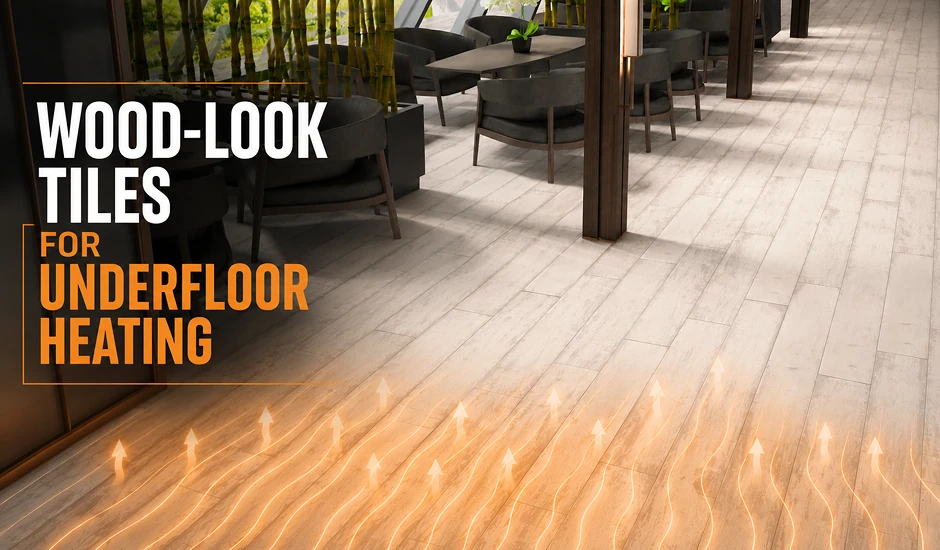
Underfloor heating (UFH) is one of the most luxurious and energy-efficient ways to warm your home. But when it comes to choosing the right flooring to go over it, homeowners often find themselves torn between the cozy aesthetic of wood and the practical demands of a heating system. If you are wondering, "Can I install wood-look tile over underfloor heating?" the answer is a resounding yes. In fact, it is arguably the best material you can choose. While traditional solid wood and engineered wood come with a long list of risks and temperature restrictions when paired with UFH, ceramic and porcelain wood-look tiles offer a flawless, stress-free experience. Here is everything you need to know.
The Problem with Real Wood and Underfloor Heating
To understand why wood-look tiles are the superior choice, we first need to look at the severe limitations of real wood. Many people love the natural warmth of timber, but combining it with a radiant heating system is a logistical nightmare. Here is why installing traditional wood over underfloor heating is incredibly risky:
- Wood is a natural insulator.
- This insulating property can cause your heating system to work overtime and use a lot of excess energy.
- Solid wood flooring is not stable enough for underfloor heating and is prone to 'gapping', 'cupping', and 'crowning'.
- Changes in moisture content from the continually changing temperatures will likely make solid floorboards expand and contract at unacceptable levels.
- Even engineered wood-which is more stable-requires strict temperature control, and the surface heat shouldn't go above 27°C to prevent excessive shrinking.
- When using engineered boards, you must gradually increase the heating temperature (e.g., 1°C per day) to avoid the top hardwood layer developing surface splits.
- Engineered wood also requires an expansion gap of typically 10-15mm around the perimeter of the room to allow the wood to naturally expand and contract.
- Real wood flooring requires a minimum of 72 hours of acclimatization in the room before it can even be fitted.
Why Wood-Look Tile is the Ultimate Solution
At Metro Wooden Tiles, we believe you shouldn't have to compromise on style to get a warm, functional floor. Our premium wood-look tiles eliminate every single disadvantage of real wood.
1. Exceptional Thermal Conductivity
Unlike wood, which blocks heat, ceramic and porcelain tiles are incredible thermal conductors. They absorb the heat from your underfloor system and transfer it rapidly and evenly into your room. Your heating system works more efficiently, lowering your energy bills.
2. Zero Warping, Cupping, or Splitting
Tiles are completely immune to temperature and humidity fluctuations. You can crank up your underfloor heating without worrying about a strict 27°C limit, and you will never have to worry about your planks buckling or splitting.
3. No Acclimatization or Expansion Gaps
With wood-look tiles, there is no need to wait 72 hours before installation. Furthermore, you do not need to leave unsightly 15mm expansion gaps around your skirting boards.
Can You Install Wood-Look Tile Over Existing Tiles with UFH?
If you already have a tiled floor with an underfloor heating system beneath it, you might be wondering if you can just lay your new wood-look tiles directly on top. Installing new flooring directly over existing tiles saves time and money. Because it avoids a messy, labor-intensive removal process, the disruption to your daily routine is minimal. However, before you do this, you must conduct a critical pre-installation check:
- Floor Height & Doors: Adding a new layer of flooring will raise the overall floor height. You may need to trim the bottoms of your doors to ensure they open and close properly, and you might need transition strips at doorways.
- Weight Limits: Tile is heavy, and adding a second layer adds even more weight to your subfloor. You must ensure your floor loading is designed to handle this extra weight.
- Soundness of Existing Tiles: You must tap each existing tile to check for a hollow sound, which indicates the tile is loose. Loose tiles must be removed or fixed to ensure a stable surface.
- Levelness: The floor should not deviate more than 3mm over a 1-meter length. If there is major unevenness, you may need to apply a full self-levelling screed over the entire floor before laying the new tiles.
The Verdict
If you want the timeless elegance of oak, walnut, or maple flooring combined with the cozy luxury of underfloor heating, wood-look tiles are the undisputed champion. They offer maximum heat transfer, ultimate durability, and zero maintenance headaches.
Frequently Asked Questions (FAQs)
1. Can you tile directly over underfloor heating?
Yes, you can and absolutely should! Ceramic and porcelain tiles (including wood-look tiles) are widely considered the best flooring option for underfloor heating. They have excellent thermal conductivity, meaning they heat up quickly and distribute the warmth evenly across the room. Just ensure your installer uses a flexible tile adhesive and grout to accommodate any slight thermal movement.
2. What flooring is not suitable for underfloor heating?
Solid wood flooring is highly discouraged because it is severely affected by temperature and humidity fluctuations, making it prone to warping, cupping, and gapping. Additionally, thick carpets and standard laminate underlays act as heavy insulators, blocking the heat from entering the room and forcing your heating system to waste energy.
3. Can you put wood over underfloor heating?
While you cannot use solid wood, you can use engineered wood flooring. However, it comes with strict limitations. The surface temperature typically cannot exceed 27°C, the boards require days of acclimatization, and you must leave expansion gaps around the room. If you want the exact look of wood without these stressful temperature limits, wood-look tile is a far superior and durable alternative.
4. What flooring can I put over underfloor heating?
The most efficient options are porcelain and ceramic tiles, natural stone, and polished concrete due to their high heat conductivity. You can also use engineered wood and luxury vinyl tiles (LVT), provided they are explicitly rated for underfloor heating and installed with the correct underlayment.
5. What is the downside of underfloor heating?
The main downsides are the initial installation cost and the time it takes to install. Retrofitting underfloor heating in an older home can also raise the floor height, which might require trimming doors or adjusting skirting boards. Additionally, it restricts some of your flooring choices, strictly ruling out solid hardwood.
6. Is underfloor heating really worth it?
Yes, it is highly worth the investment. Underfloor heating provides luxurious, consistent warmth without the cold spots associated with traditional radiators. It is highly energy-efficient, runs at lower temperatures, frees up wall space, and can significantly increase the resale value of your home.
7. What is the lifespan of underfloor heating?
Underfloor heating is incredibly durable. Electric wire systems typically last 25 to 30 years, while the pipes used in wet (water-based) systems can last upward of 50 years. In most cases, the heating system will easily outlast the flooring placed on top of it-especially if you choose a lifetime material like porcelain wood-look tiles.