

23 October 2026 6 min read
Wood look tiles or vinyl (SPC) flooring: an honest comparison
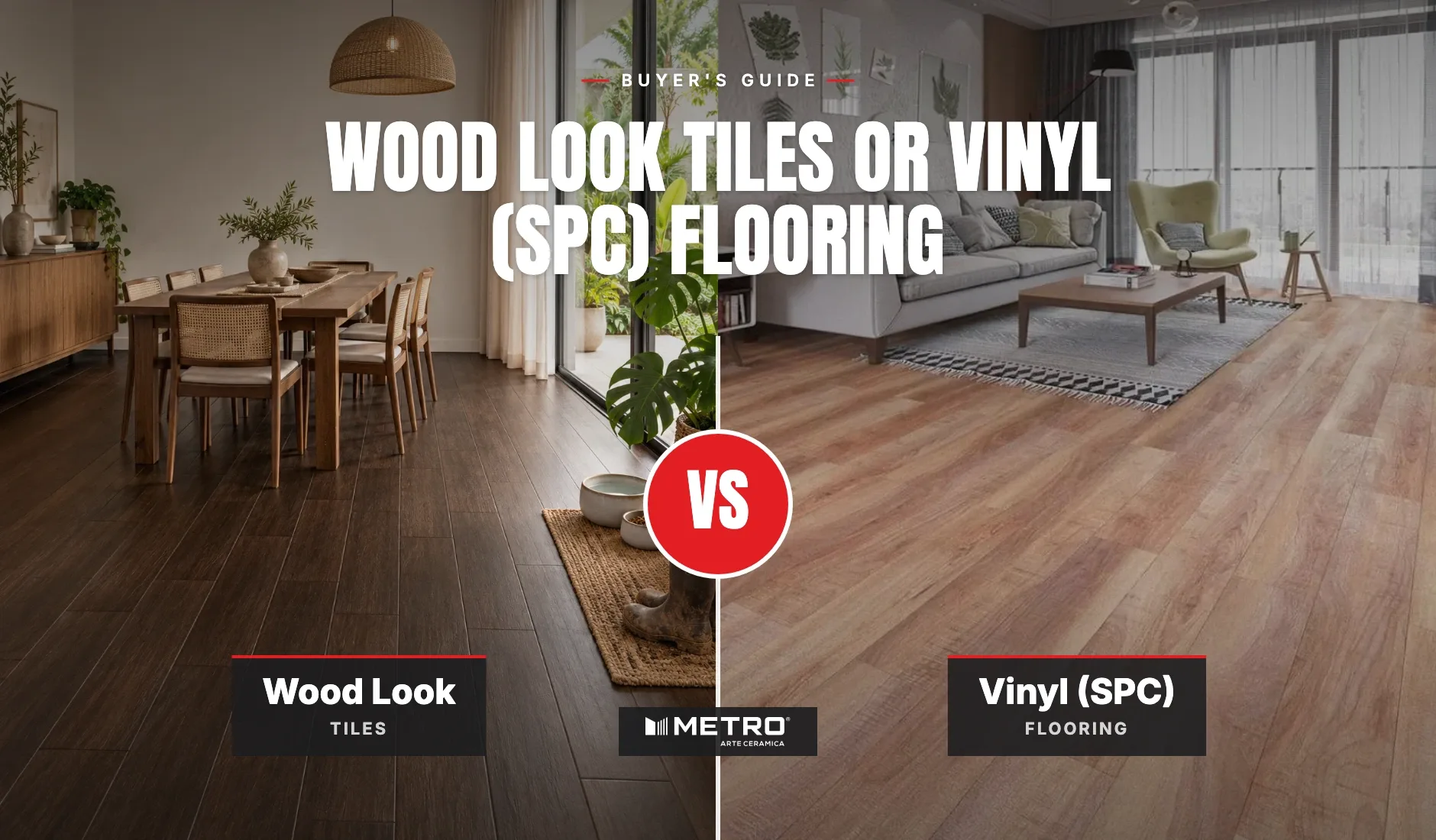
Ask a renovation contractor in Malaysia how to get a wood floor without real wood, and the answer is usually one of two things: vinyl planks clicked over the existing tiles, or wood look tiles laid in a bed of adhesive. Both look like timber. They behave very differently over ten years in a humid condominium or a terrace house with a car porch.
We make wood look tiles, so we are not neutral. That is why this comparison tries to be fair about where vinyl wins. It covers what each material is, how each handles water, heat and wear, and which rooms suit which.
What you are actually buying
Vinyl and SPC planks
Vinyl plank flooring is a plastic floor covering. The look comes from a printed film under a clear wear layer. SPC (stone plastic composite) adds a rigid core of PVC and limestone powder, and most planks click together over the existing floor. In Europe, heterogeneous PVC floor coverings in plank form are specified under EN ISO 10582, a separate family of standards from tiles.
Wood look tiles
Our wood look tiles are glazed ceramic: clay pressed in a mould, printed with a 3D high-definition wood design and fired with a glaze on top. The body absorbs 6 to 8% (group BIIb under EN 14411), and the glaze is what faces the room.
Where vinyl and SPC win
- Speed: a click floor can go down over old tiles in a day or two, with no hacking and little dust. In a condominium with strict renovation hours, that matters.
- Comfort: a plastic floor is softer and warmer underfoot, and quieter. Neighbours below a condominium unit notice the difference.
- Thickness: a thin plank over old tiles barely changes the floor height at the doors.
- Up front cost of the work: less labour usually means a lower bill on the day.
If those four decide it for you, vinyl is a reasonable choice, and we would rather say so.
Where wood look tiles win
Water and humidity
A glazed tile floor is laid in a bed and grouted, so water does not get underneath. A click floor has joints every plank, and water that gets through them sits on the old floor underneath. In a wet kitchen, a bathroom or near a balcony door in the monsoon, that is where the trouble starts.
Heat and sun
Most vinyl makers set limits on direct sun and high temperatures in their installation instructions, because plastic moves with heat. A floor by a west-facing window or a sliding door can open up at the joints. A fired ceramic tile does not move with heat the way plastic does, and it stays cooler underfoot in the Malaysian heat.
Outdoors
Wood look tiles can go outdoors. Every Metro design can be used on car porches, patios, balconies and pool decks, with Matt Texture for grip. Vinyl stays indoors. With tile, one design can run from the living hall through the sliding door and onto the patio.
Wear
Vinyl wear layers are thin, and grit, chair legs and pet claws mark them over the years. When the wear layer goes, the print goes with it. A fired glaze has no separate wear layer to wear through, and a damaged tile can be replaced on its own if you keep spares.
The look up close
Our planks have a curve edge formed in the mould and each design has several random faces, so neighbouring planks are not identical. A curve edge with a 3 to 5 mm joint reads as separate boards.
Choosing room by room
- Living hall and bedrooms in a condominium: either works. Vinyl if speed and quiet matter most; tile if you want one floor through to the balcony.
- Wet kitchen, bathroom, balcony: wood look tiles in Matt Texture. Read our guide to wood look tiles for bathrooms and wet kitchens.
- Ground floor of a terrace house or semi-D: wood look tiles. Ground floors take the most water, sand and traffic.
- Car porch, patio, pool deck: wood look tiles only.
Sizes we make
- 150x900mm: the narrowest plank, closest to a sawn timber board.
- 200x1000mm: a mid-length board for bedrooms and smaller halls.
- 200x1200mm: the widest choice of Matt Texture designs.
- 200x1400mm: our longest board, for a long living hall with fewer joints.
What to check before you decide
- For vinyl: the wear layer thickness, the maker's limits on sun and heat, and whether the warranty covers a wet kitchen.
- For tiles: the tested water absorption, the edge type, the number of random faces and the surface for each room.
- For both: the finished floor height at doors and the kitchen cabinets, and what replacing one damaged plank involves.
Our specifications are in the downloadable catalogue.
The short version
Vinyl is quicker, softer and quieter, and it suits dry upstairs rooms where speed matters. Wood look tiles suit the rooms that get wet, the floors in the sun, and anywhere the floor carries on outside. If you are flooring a whole terrace house, many owners use tile downstairs and decide room by room upstairs. Contact us for samples and put one next to a vinyl sample at your sliding door.
Frequently asked questions
Is vinyl or tile better for Malaysian weather?
Tile copes better with water, humidity and sun. Vinyl is fine in dry, shaded rooms, but water through the joints and heat by windows are its weak points.
Can SPC flooring be laid over existing tiles?
Usually yes, if the old floor is flat and sound. That is its main advantage. Check the maker's instructions for the room you have in mind.
Are wood look tiles colder than vinyl?
Yes. Tile is cooler and harder underfoot, which many Malaysian homes prefer in the heat, while a plastic floor is softer and warmer.
Can I use vinyl in a wet kitchen?
Check the maker's warranty first. Water that gets through the click joints sits underneath. Wood look tiles in Matt Texture are the safer choice there.
Which lasts longer, vinyl or tile?
A fired glaze has no wear layer to wear through, and a damaged tile can be replaced on its own. Vinyl lasts as long as its wear layer does.
Can wood look tiles go outside?
Yes. Every Metro design can be used outdoors, on car porches, patios and pool decks, with the Matt Texture surface for grip.