

16 November 2026 7 min read
Wooden tiles vs laminate and engineered wooden flooring in India
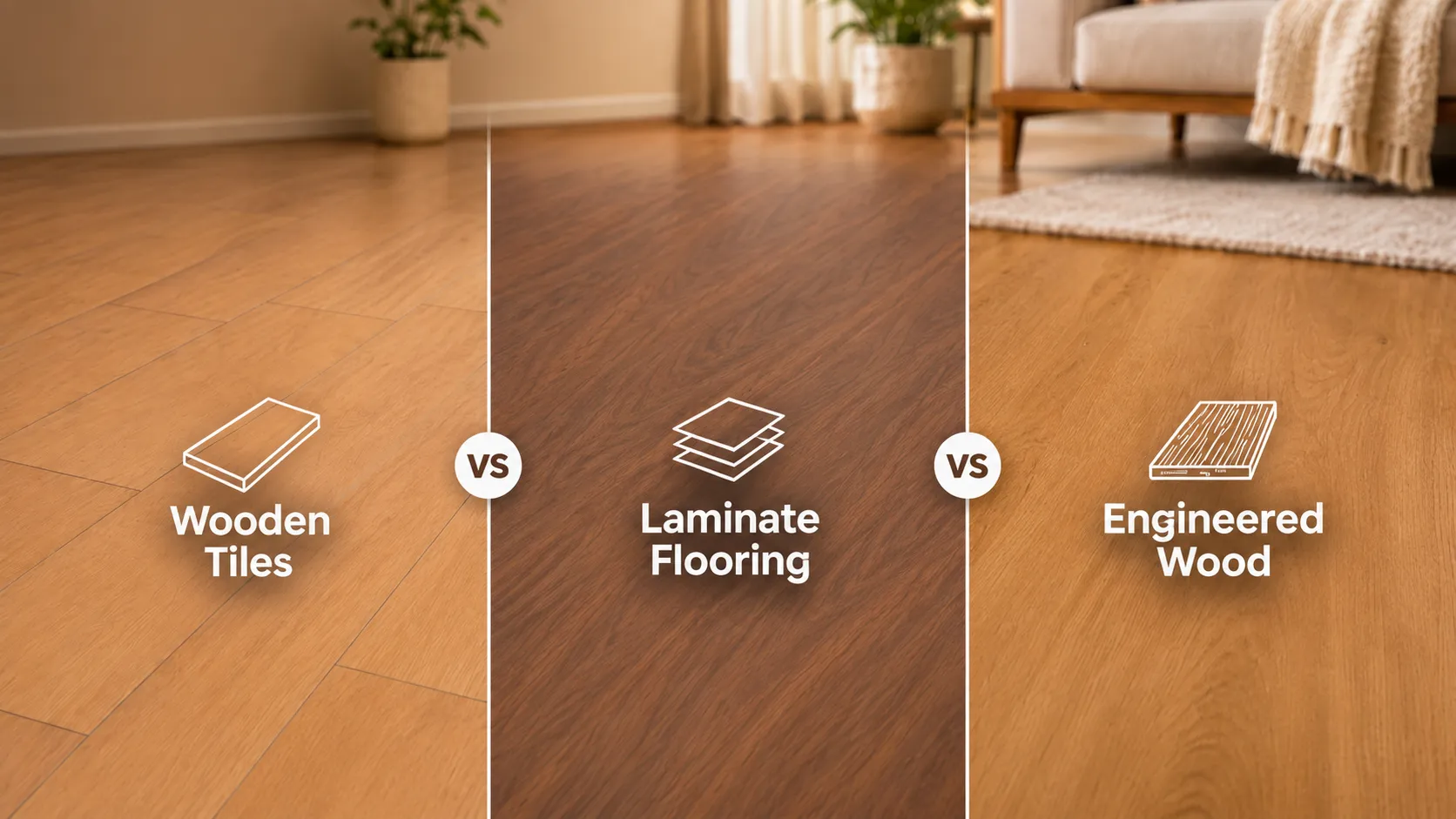
Most people who ask for "wooden flooring" in India are choosing between three products that look alike in a showroom: laminate, engineered wood and wooden tiles. Under the surface they have almost nothing in common, and the difference shows up in the first monsoon, not on the day of fitting.
This guide compares the three on water, termites, upkeep, feel and what actually decides the cost, so you can pick room by room. It does not quote rates; those depend on your city, format and area.
What each product actually is
Laminate is a printed photograph of wood under a clear wear layer, pressed onto a core of high-density fibreboard, which is compressed wood fibre and resin. It clicks together and floats over a foam underlay. In Europe it is covered by EN 13329, the standard for laminate floor coverings.
Engineered wood is a thin layer of real timber, oak, teak or walnut, glued over a plywood or softwood base. The top is real wood, so it looks, feels and ages like wood.
Wooden tiles are glazed ceramic tiles with a printed and textured wood grain. Metro's tiles absorb 6 to 8% water in the body, and the glaze on top is what faces the room. They are fixed in a cement bed or tile adhesive, like any floor tile.
Water: the deciding factor in most Indian homes
India gets 80% of its annual rainfall in the southwest monsoon from June to September, according to the India Meteorological Department. Months of damp air, wet footwear and daily wet mopping are what Indian floors live with.
Laminate: the fibreboard core swells when water reaches it, usually at the joints or edges. Once swollen, a plank does not shrink back, and the only fix is replacement. A leaking washing machine or a mop left wet overnight is enough.
Engineered wood: the timber top and plywood base move with humidity. Gaps open in a dry Delhi winter and boards cup in a Mumbai monsoon. Standing water stains it.
Wooden tiles: water on the glaze does nothing. You can mop daily with water. The tile and grout resist water but are not a waterproof layer, so a bathroom still needs a waterproofed base underneath.
Termites and pests
Laminate and engineered wood are both made from wood. The fibreboard, the plywood base and the timber top can all be eaten by termites, which are active across central and southern India. Protecting timber from them is a research field of its own: the forest protection division of ICFRE's Institute of Wood Science and Technology in Bengaluru studies termite problems in timber and the treatments that guard against them.
A floating floor also leaves a hollow gap underneath, out of sight. Damage often shows only when a plank gives way.
Ceramic tile is fired clay with a glaze. Termites cannot eat it, and a tile bedded in cement leaves no void beneath it.
Upkeep over ten years
Laminate: sweep and use a barely damp mop. A scratch through the wear layer cannot be repaired, only replaced, and matching a discontinued design later is difficult.
Engineered wood: needs refinishing as the top wears. How many times depends on the thickness of the timber layer, and thin layers may allow only one sanding.
Wooden tiles: sweep, mop, and keep the grout clean. No polish, no sanding. A chipped tile is lifted and replaced, which is why you keep spare boxes from the same batch.
Feel underfoot
This is where wood wins, and it is worth being honest about it.
Engineered wood is warmer and slightly softer underfoot. It is quieter, too. Laminate is also warm to touch, though a floating floor can sound hollow under shoes.
Tile is harder and cooler. In a Chennai summer that is a relief; on a January morning in Delhi or Chandigarh it can feel cold. A rug in the bedroom solves most of it, and tile suits underfloor heating if you want to go further.
Wooden tiles get closer to the look of wood than to its feel. Metro's planks carry a 3D print with real grain relief, several random faces per design so neighbouring planks differ, and a curve edge formed in the mould. The rounded edge is what makes the joint read as the line between two boards rather than a grid. More on that in the guide to tile edges.
What decides the cost
Search for "wooden flooring vs tiles cost" and you will see rates per sq ft. The rate alone misleads, because each product carries different costs around it.
- Laminate: the underlay, skirting and threshold strips are often extra. It needs a dry, level base. It is quick to fit, but planks that swell in a room that gets wet have to be replaced early.
- Engineered wood: a higher material cost, an installer who works with wood, and refinishing over the years.
- Wooden tiles: the tile, the bed or adhesive, grout and a mason's labour. Fitting takes longer, with three to four days of curing before grouting. After that there is little to spend on.
The honest comparison is the cost over the years you plan to stay, not the rate on day one. Ask your dealer or us for a rate on your format and area.
Where laminate or wood is the better choice
- A rented flat or a short stay: laminate goes down quickly over existing tile and comes up again.
- An upper-floor bedroom in a dry climate where warmth underfoot matters most: engineered wood.
- Floors that must stay at their existing level: laminate adds the least height. Metro's planks are 9 to 9.5 mm plus the bed.
Kitchens, bathrooms, balconies, ground floors and any room with daily wet mopping point to tile. See wooden tiles for kitchens and for bedrooms for room-specific detail.
Decide by the wettest room
Start from the room that gets wet most often. If that room needs tile anyway, using wooden tiles through the rest of the house keeps one floor throughout. Metro is India's No. 1 brand specialised in wooden tiles, in four plank sizes from 150x900mm to 200x1400mm. Request a sample and lay it next to the laminate sample on your own floor.
Planning wooden tiles for your home?
Tell us the room and the size you have in mind. Our team replies within 24 to 48 hours, and we can post you a sample first so you can see the surface in your own light.
Frequently asked questions
Is laminate flooring good for Indian homes?
In dry rooms, yes. Laminate has a fibreboard core that swells if water reaches it, so it is a poor choice for kitchens, bathrooms, ground floors and homes that are wet-mopped daily.
Which is better, wooden tiles or engineered wood?
It depends on the room. Engineered wood feels warmer and can be refinished; wooden tiles handle water, termites and daily mopping without any polishing or sanding.
Do termites attack laminate flooring?
They can. Laminate's core is compressed wood fibre, and the void under a floating floor hides damage. Ceramic wooden tiles are fired clay and cannot be eaten by termites.
Are wooden tiles cold underfoot?
Cooler than wood, yes. In most Indian summers that helps; in a north Indian winter, a rug or underfloor heating takes care of it.
Can wooden tiles be laid over an old floor?
Often, if the old floor is sound, flat and well bonded. Your mason should check for hollow tiles first and allow for the added height at doors.
Do wooden tiles need polishing like wooden flooring?
No. They are glazed, so sweeping and mopping are enough. Keep the grout clean and keep a few spare tiles from the same batch.