

18 November 2026 7 min read
Timber look tiles for rentals and granny flats: a landlord's guide
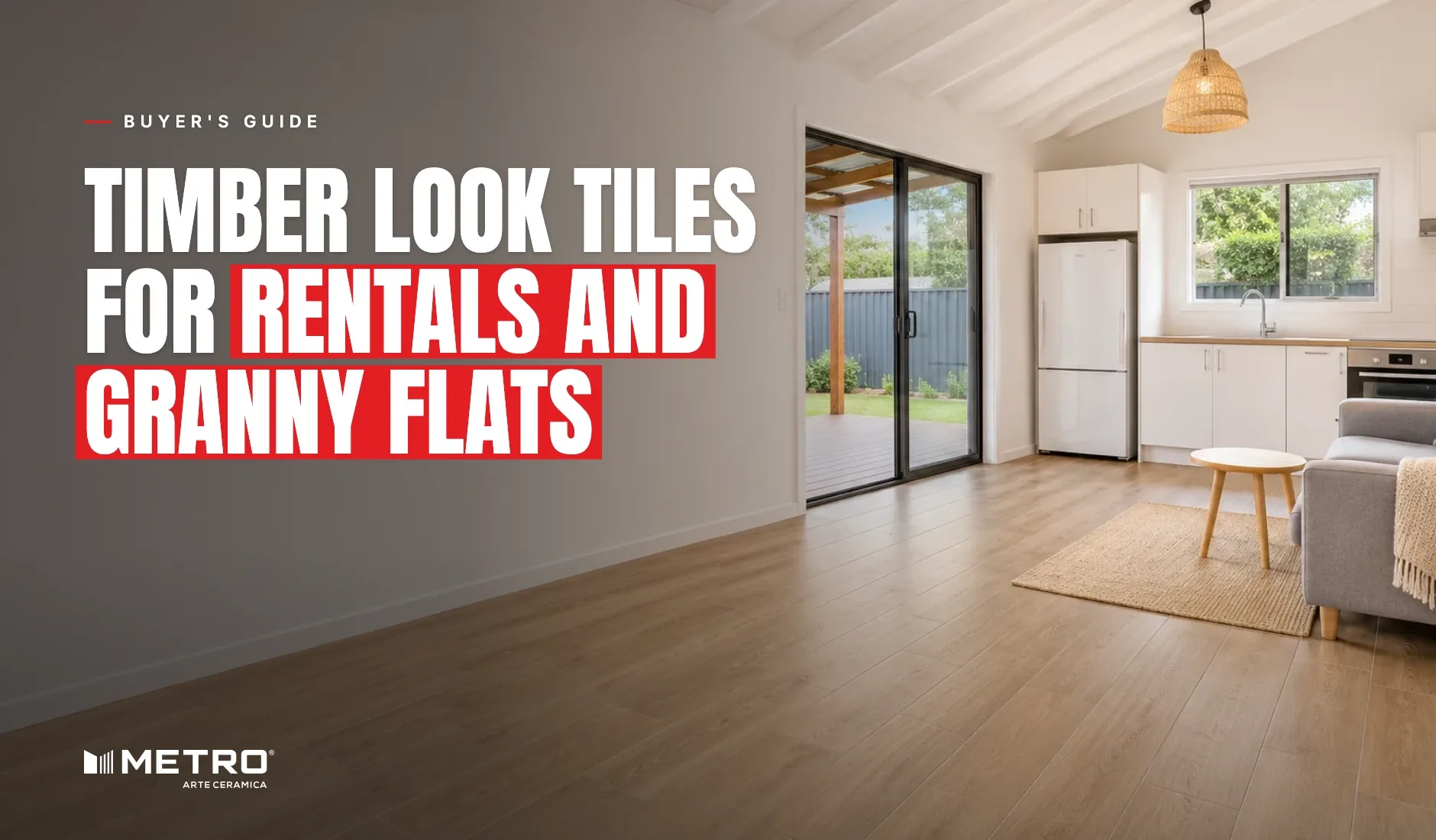
The tenants have moved out and the property manager sends through the exit report. The floor is the expensive line: carpet stains in the lounge, a dog-scratched hallway, a floating floor lifting at the laundry door. Then comes the argument over what is fair wear and tear and what comes out of the bond.
This guide is for landlords, builders and anyone fitting out a granny flat or investment property. It covers how timber look tiles hold up between tenants, what wear looks like on a tiled floor, and the few decisions that make repairs quick.
What wears out first in a rental
Floors take more of a beating in a rental than in an owner-occupied home, and they are the hardest thing to fix between tenancies.
- Carpet: traffic marks are expected, but stains and burns are not. NSW Fair Trading's examples of fair wear and tear versus damage put furniture marks and traffic wear on one side, stains and burns on the other.
- Timber: the same list treats scuffed wooden floors as fair wear and tear, and badly scratched or gouged ones as damage. Either way, a sand and recoat means the property sits empty for days.
- Floating floors: water from a laundry overflow or a dog bowl gets into the joints and lifts the boards at the edges.
The cost is not only the repair. It is the vacant weeks while trades come and go.
Why timber look tiles suit a rental
There is no coating to wear through
Our timber look tiles are glazed ceramic, with the glaze fired on in the kiln. Claws, chair legs and grit do not wear through a polyurethane layer, because there is none. Nothing needs sanding or recoating between tenancies.
The vacate clean is a mop, not a machine
Water and spills sit on the glaze. The body under it absorbs 6 to 8%, but the glaze is what faces the room. A vacate clean is a sweep and a mop with a pH neutral cleaner, plus attention to the grout.
Pets are less of a gamble
Allowing pets widens the pool of tenants. On tile, the risks are mostly in the grout and in grip. Matt Texture gives paws and feet more to hold. Our post on timber look tiles with dogs and kids covers it in detail.
It still reads as a timber floor in the listing photos
Every Metro plank has a curve edge formed in the mould, so each joint reads as the shadow line between two boards. Each design has several random faces, which stops an obvious repeat in a wide shot of an empty room.
What wear looks like on a tiled floor
A tiled floor ages differently from timber or carpet. Over years the grout darkens in the walkways. Most of that is what the rules call fair wear and tear. Consumer Affairs Victoria explains that rental providers cannot claim bond for fair wear and tear, which it defines as deterioration from reasonable use and natural forces.
A chipped or cracked tile from something heavy dropped on it is a different matter, and your state's rules decide how it is treated. What helps every side is a detailed condition report at the start, with dated photos of each room's floor, and a quick, cheap repair when something does go wrong.
Spare tiles are the cheapest insurance
The single most useful thing a landlord can do is keep a spare box.
- Order it with the floor. Buy at least one extra box from the same batch at the same time as the main order.
- Note the calibre code. Each box carries a calibre code for the plank's exact length. A replacement from the same calibre fits the existing joints.
- Label it and leave it on site. Write the design name, size and the rooms it was used in on the box. Store it in the garage or a locked cupboard, and record it in the property file so the next property manager knows it is there.
- One plank, not one room. With a spare, a tiler lifts the damaged plank and sets a new one in its place, rather than relaying a room.
Granny flats and small investment builds
A granny flat is a small floor with a lot of jobs: living, kitchen, bedroom and bathroom in one footprint. One tile through the whole thing keeps it simple to clean and to repair.
- Use one design throughout. Fewer transitions, fewer trims and one spare box covers every room.
- Matt Texture everywhere. It is the surface we suggest for bathrooms and wet areas, and in a small flat the bathroom floor and the living floor are often a step apart.
- Pick a plank that fits small rooms. The 150x900mm or 200x1000mm planks waste less around a vanity and kitchen cabinets than a long board. In a bigger open-plan rental, the 200x1200mm range has the widest choice of Matt Texture.
- Waterproof the wet areas first. Tile and grout resist water but are not a waterproof layer. See our guide to bathrooms, ensuites and laundries.
Choosing one floor for a portfolio
If you own more than one property, using the same design across them means spares can move between addresses. The Oaklore family is made in every plank size, so a 150x900mm unit and a 200x1200mm house can share a tone. Mid tones hide the everyday best: East Teak is a mid brown in Matt Texture, and Oaklore Beige is a lighter honey tone. Very pale and very dark floors show dust and marks between inspections.
Where tile is the wrong call
Tile is not always the answer for a rental. In a strata apartment, check the by-laws on hard floors and acoustic underlay before quoting the job. A suspended timber floor that flexes needs a tiler's assessment before any tile goes down. Tile is hard and cool underfoot, so tenants in colder areas may want rugs, and it usually costs more to lay than carpet. The saving comes over several tenancies, not on day one.
What to tell your tiler
- Full adhesive bed. Hollow spots under a plank are where a dropped object cracks it.
- Joints of 3 to 5 mm, quarter-plank offset. Use spacers of at least 3 mm, and lay the planks a quarter of their length apart, never 50:50.
- A grout for hard use. Ask for a stain-resistant grout in a tone close to the tile.
- Hand over the spares. Ask the tiler to leave the spare box labelled on site.
The short version
Buy the floor once, keep a spare box, and choose a mid tone in Matt Texture. Download our catalogue, then send through the areas you need for each property.
Planning timber look tiles for your home?
Tell us the room and the size you have in mind. Our team replies within 24 to 48 hours, and we can post you a sample first so you can see the surface in your own light.
Frequently asked questions
Are timber look tiles good for a rental property?
Yes. The glazed surface has no coating to wear through and mops clean at the end of a tenancy. A damaged plank can be replaced on its own if you keep spare tiles from the same batch.
Is tile better than vinyl plank for a rental?
They suit different budgets. Tile costs more to lay but does not lift with water or need replacing between tenancies. Vinyl plank is cheaper up front and softer underfoot, but it scratches and dents more easily than a fired glaze.
Can a landlord claim bond for worn grout?
Generally not, if it is gradual wear from reasonable use. Fair wear and tear is not claimable from the bond. Damage beyond that is assessed under your state's rules, so a good condition report matters.
How many spare tiles should I keep for an investment property?
At least one full box from the same batch and calibre as the floor, labelled and stored on site. For a larger house or several rooms, keep one box per size used.
What is the best floor for a granny flat?
One timber look tile through every room, in Matt Texture, keeps a small dwelling simple. A 150x900mm or 200x1000mm plank fits small rooms with less waste.
Do timber look tiles suit tenants with pets?
Yes. There is no coating for claws to scratch through, and Matt Texture gives better grip. Choose a stain-resistant grout, since the joints are the part that can mark.