

22 July 2026 5 min read
Chevron vs Herringbone Flooring: What's the Difference?
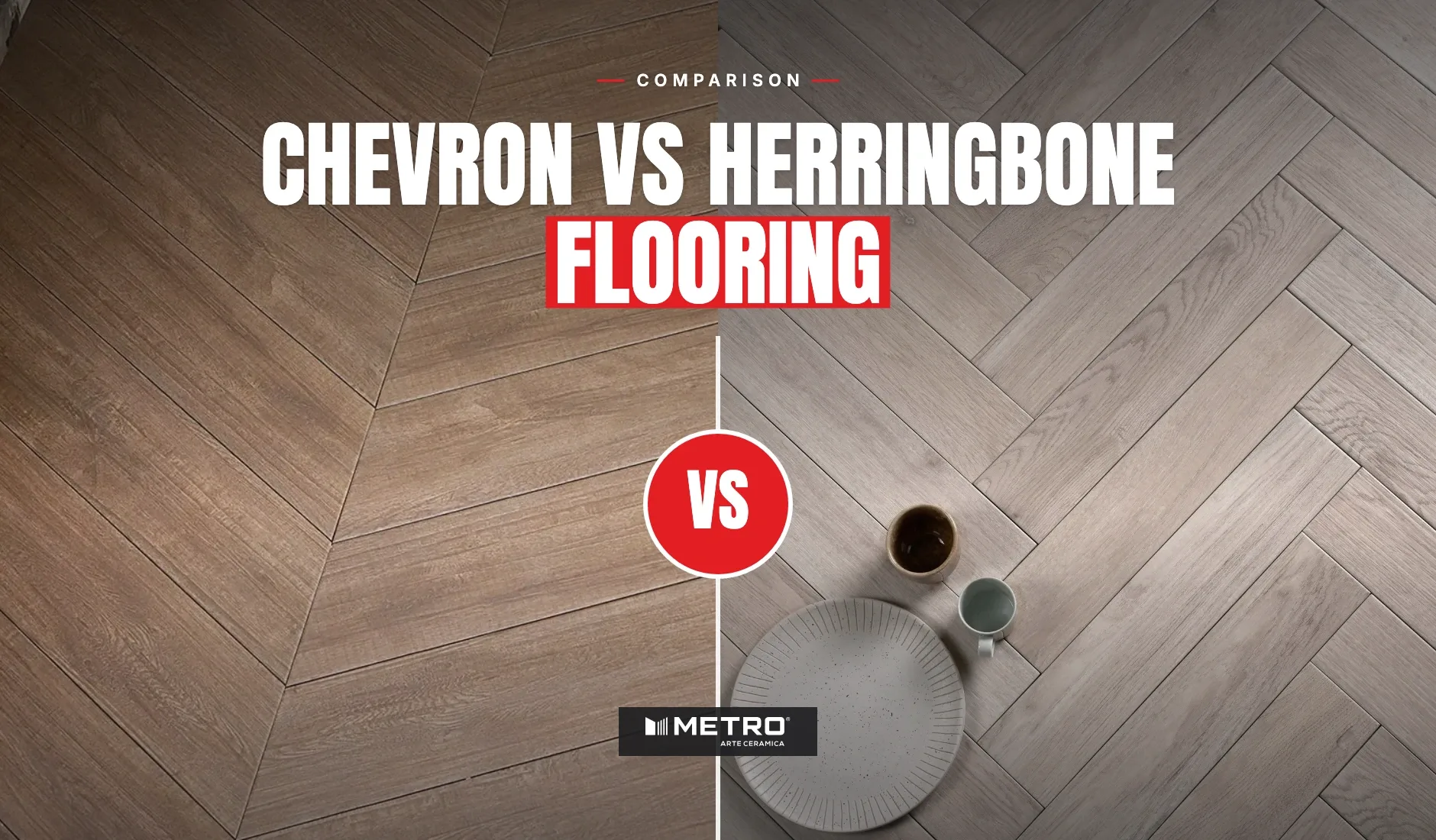
Chevron and herringbone are the two best-known zigzag floor patterns. They look alike at a glance, but they are built differently, they install differently, and they change how a room feels in different ways. Here is how to tell them apart and how to choose between them for your home.
What is Herringbone?
Herringbone takes its name from the bones of a herring. Roman builders laid bricks this way in roads and walls, a method called opus spicatum, because the interlocking pattern held together under load. It later became a common parquet pattern in the grand houses of Europe.
The design: rectangular planks meet at 90 degrees, with the end of one plank butting against the side of the next. The result is a broken, staggered zigzag.
Because herringbone uses ordinary rectangular planks, it works with Metro's standard plank sizes:
- 150x900mm planks: suit living rooms and hallways of a normal size.
- 200x1000mm planks: give a bolder pattern in larger rooms.
- 200x1200mm planks: stretch the pattern along long rooms.
- 200x1400mm planks: for large open-plan spaces.
What is Chevron?
The word chevron comes from the French for the rafters of a roof, which meet at a point. French parquet laid this way is known as point de Hongrie.
The design: the ends of each plank are cut at an angle, so the planks meet point to point and form a continuous V down the room. The lines are sharper and more directional than herringbone.
Metro makes chevron tiles in two sizes, with the angled ends already formed as LEFT and RIGHT pairs, so the points meet without cutting angles on site, apart from at the edges of the room:
- 80x450mm chevron: a fine, detailed pattern for feature walls, backsplashes and smaller rooms.
- 150x900mm chevron: a bolder V for floors and larger rooms.
Chevron vs. Herringbone: The Key Differences
How the room looks
- Chevron: the continuous V leads the eye along the room, so narrow rooms and hallways look longer. The effect is crisp and modern.
- Herringbone: the staggered joints add texture and break up the floor, which makes large rooms feel warmer and more relaxed.
Installation
- Chevron: the points have to line up exactly along a straight centre line, so it takes careful setting out and more time. Our chevron installation guide explains how.
- Herringbone: the planks meet at right angles, so small errors are easier to correct as you go.
Upkeep
Neither pattern needs more cleaning than any other tile floor. On a tile floor the joints are grout lines, not gaps between boards, so neither pattern traps dirt the way old wooden parquet can.
Why use tiles for these patterns?
Chevron and herringbone parquet in real wood is expensive to lay and hard to look after. Wood takes on moisture, so in kitchens, bathrooms and through the Indian monsoon, wooden parquet can warp, cup and open up at the joints.
Metro wooden tiles give you the same patterns without those problems:
- No warping: glazed ceramic with a water absorption of 6 to 8% does not swell or shrink with humidity the way wood does.
- Works with underfloor heating: tile passes heat well and does not shrink as the floor warms.
- Accurate points: Metro chevron tiles come with the angled ends formed as LEFT and RIGHT pairs, so the Vs line up.
- Easy upkeep: no sanding or polishing. Sweep and mop to keep the pattern clean.
Which Pattern Should You Choose?
Neither is better; it depends on what you want the room to do. Choose herringbone for texture and a warm, traditional feel, especially in larger rooms. Choose chevron for strong lines and a modern look, or to make a narrow room feel longer.
See the Metro chevron collection or the full range of plank sizes to plan your floor.
In chevron, two designs to start with are Oaklore Cemento (24 random faces) and Oaklore Grigio (24 random faces), both 80x450mm.
Frequently Asked Questions (FAQs)
Q1. Is there a difference between herringbone and chevron?
Yes. Herringbone uses rectangular planks that meet at right angles, forming a broken, staggered zigzag. Chevron uses planks with angled ends that meet point to point, forming a continuous V.
Q2. Is chevron or herringbone harder to install?
Chevron is harder. The points must line up exactly along a centre line, so it needs careful setting out. Herringbone is more forgiving because the planks meet at right angles.
Q3. Is chevron more expensive than herringbone?
Chevron usually costs more to install, because it takes longer to set out and lay. With Metro chevron tiles the angled ends come ready-formed, which saves cutting on site.
Q4. Are chevron and herringbone patterns outdated?
No. Both have been in use for centuries and are still widely used in homes, hotels and offices. On wood-look tiles they give the parquet look with far less upkeep.
Q5. What is the disadvantage of herringbone flooring?
In a very small room, especially with a dark tone or strong grain, herringbone can look busy. It also takes longer to lay than straight planks, though it is easier than chevron.