

11 September 2026 11 min read
Best wood look tile flooring trends for US homes in 2026
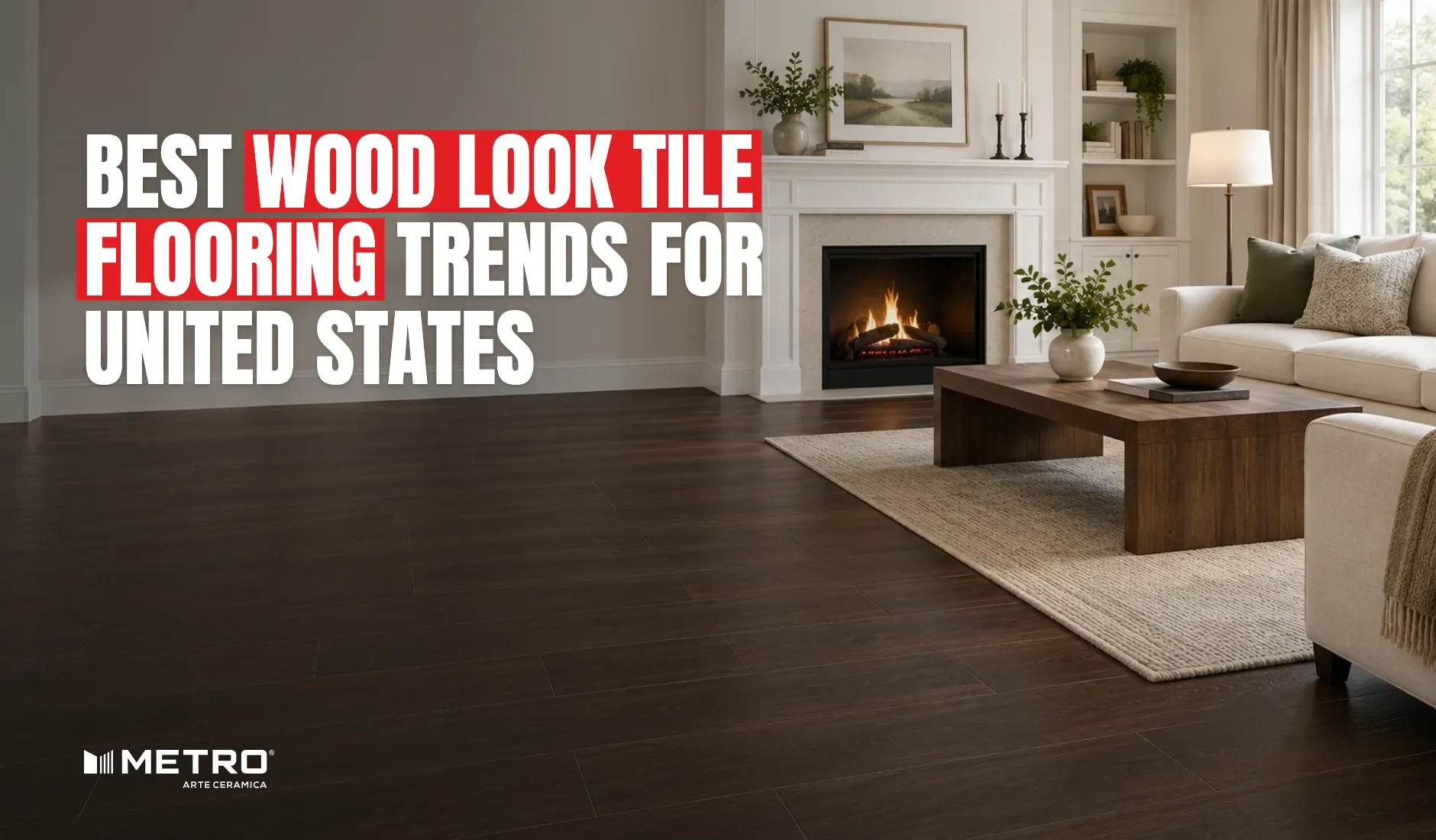
Five years ago, wood look tile was the backup plan. The thing you picked when real hardwood was too expensive or the room was too wet. That has flipped. In 2026, it is the starting point for most flooring conversations in new US homes and renovations. If you are still weighing it against the real thing, our cost, durability and maintenance comparison with real hardwood sets the two out side by side.
What changed? The tiles got bigger, the prints got better, and designers started treating them as a material with its own identity rather than a cheaper imitation of something else. Here are seven directions worth paying attention to if you are picking floors this year.
Wood Look Tile Flooring Trends 2026
1. Extra wide and extra long planks for wood look tile floors
The standard wood look tile five years ago was 6"x24" (150x600mm). Fine for a bathroom. Underwhelming in a living room.
Now look at what is selling. 200x1200mm (8"x48") planks are the default for any room larger than a closet. 200x1400mm (8"x55") planks are close behind, nearly five feet per tile. At that length, your eye follows the grain, not the grout lines. The floor stops reading as "tiles arranged to look like wood" and starts reading as, well, wood.
Fewer grout lines also means less scrubbing, less discoloration over the years, and fewer places for kitchen spills to settle into. The practical case is as strong as the visual one.
One thing to know: big planks are harder to keep flat if the edge profile is wrong. A 1,200mm rectified plank that bows even half a millimeter will catch morning light along the lip and drive you crazy. Curve edge planks avoid this entirely because they are not cut after firing. More on that in the rectified vs non rectified guide.
2. Diamante and the rise of mixed material wood look tile floors
Here is the trend nobody saw coming. A tile that is not pretending to be wood. It is wood grain, yes, but blended with brass profile accents and marble inspired textures on the same surface.
Metro's Diamante collection does something unusual. Each 203x1010mm (8"x40") plank carries five random face patterns, so no two tiles next to each other look alike.
One catches a brass stripe at an angle. The next shows a vein of marble threading through warm oak. The third is pure wood grain. Laid together, the effect is a floor that looks like it was assembled by hand over weeks, not tiled in a day.
It lands hardest in entryways and dining rooms. The kind of space where someone walks in, looks down, and says "wait, what is that?" If your client or your spouse has ever complained that tile floors feel boring, hand them a Diamante sample.
A practical note: because the pattern does a lot of visual work on its own, keep the walls quiet. Solid paint, simple baseboards, minimal furniture. The floor is the room's personality. Let it talk.
3. Grey wash and weathered wood look tile finishes
People have been predicting grey fatigue for three years running, and grey wood look tile keeps selling. The reason is simple: nothing else works as a neutral floor in as many different rooms.
A medium grey wash floor does not fight blue cabinets, black fixtures, warm wood furniture, or white walls. It sits underneath all of them and lets the rest of the room do whatever it wants. In a household with kids, dogs, or both, it also hides dust and hair better than anything lighter or darker.
What has changed in 2026 is the quality of the grey. The flat, cold, concrete looking greys from a few years back are giving way to warmer versions with visible grain and undertones of taupe and sand. These read as weathered timber, not as a hospital corridor. Big difference in how a room feels when you walk in.
Metro's 3D printing puts actual tactile grain on the tile surface, so the grey is not just a color. Run your fingertip across it and you feel the ridges. That texture also helps with grip, which matters if you are putting grey wood look tile in a bathroom or wet area.
4. Herringbone and chevron went mainstream
Two years ago, a wood look tile herringbone floor was a designer flex. Something you saw in a boutique hotel lobby or a $2M brownstone renovation. In 2026, contractors are laying chevron patterns in starter homes and apartment flips.
The difference between the two, if you have ever mixed them up: herringbone staggers rectangular planks at 90 degrees. Chevron cuts each plank at an angle so they meet in a clean V at the center. Chevron is more precise and a bit more formal. Herringbone is busier and more forgiving on installation.
What made the shift possible is purpose cut chevron tile. Metro's 150x900mm (6"x36") chevron collection comes pre angled. No on site cutting, no wasted material, no arguments between the installer and the homeowner about the angle being off by two degrees. Faster install, cleaner lines.
For a smaller hit of pattern without committing the whole floor, the 80x450mm (3"x18") chevron works well as a feature zone. Entryway. Fireplace hearth. The base of a kitchen island. Enough pattern to notice, not enough to overwhelm.
Budget note: herringbone and chevron cost 8% to 12% more in labor than straight lay. Worth it for most people once they see the result. Not worth it if the room is so small nobody will notice the pattern.
5. Warm naturals are replacing cool tones in wood look tile
For a few years, cool tones ran the market. Grey everything, bleached everything, Scandinavian everything. That wave has not crashed, but it has company.
Honey oak. Golden teak. Warm walnut. Natural pine. These are outselling their cool counterparts in most US markets right now. The swing makes sense if you think about how Americans actually live: big open floor plans where the kitchen, living room, and dining area share one continuous floor. Warm wood grounds all of that space. Cool grey can make the same open plan feel like an airport terminal.
200x1000mm (8"x40") planks in warm finishes are the sweet spot. Wide enough to look real, warm enough to anchor a room, and available in the matte textures that have fully replaced gloss in 2026. Nobody is asking for shiny wood look tile anymore. Matte won that argument.
If you cannot decide between warm and grey, pick a tile with warm undertones in a grey carrier. Something that reads grey from across the room but warm when you stand on it. Several Metro designs hit this middle ground.
6. Wood look tile on walls (not just floors anymore)
The flooring trends 2026 produced are not all about floors. One of the fastest growing applications for wood plank tile is vertical: accent walls, shower surrounds, fireplace faces, and kitchen backsplashes.
The National Kitchen and Bath Association flagged wood look tile on bathroom walls as a top specification trend this year. Makes sense. A vertical plank wall in a shower creates a spa quality feel that paint and plastic cannot touch. And unlike real wood paneling, ceramic tile on a wall will not warp, stain, or need refinishing when the bathroom fills with steam twice a day.
For walls, 150x900mm (6"x36") planks are the most practical size. Lighter than bigger formats, easier for an installer to handle overhead, and small enough to work around outlets, niches, and corners without a painful number of cuts.
Orientation matters. Vertical planks make a room feel taller. Horizontal planks make it feel wider. Pick based on what the room needs, not based on habit. For a wood look tile backsplash behind a kitchen range, lighter tones (bleached oak, ash, white wash) reflect more light than dark wood and keep the cooking area feeling open.
7. Dark wood look tile for rooms that deserve drama
Most of the market is chasing warm naturals and soft greys. But there is a quieter trend running underneath: dark finishes in specific rooms.
Espresso. Dark walnut. Charcoal. Near black. These are not whole house floors. They are room by room choices, placed where the floor is supposed to set a mood. A dining room with dark wood look tile, white walls, and brass pendant lights feels anchored in a way that a honey oak floor never will. A home office with charcoal plank tile feels serious without the coldness of actual concrete.
Dark floors do show dust, pet hair, and water marks faster than mid tones. That is the trade off, and it is real. In a kitchen or family room with heavy daily traffic, you will notice it. In a dining room you use four times a week, you will not.
One trick: pair a dark finish with the herringbone or chevron layout from trend four. Dark tile in a V pattern catches and releases light across every angle, creating a depth that flat dark floors lack entirely. It is the combination of dark tone plus directional pattern that makes a room feel expensive.
What Metro makes (and why it fits every trend on this list)
Metro manufactures exclusively in plank format. No squares, no rectangles pretending to be planks. Every tile, from the 80x450mm chevron to the 200x1400mm long format, is 9mm (3/8") thick with 3D printed grain and multiple random face patterns per design.
Every plank is curve edge (non rectified). No post firing grinding, no bowing risk, no lipped edges catching the light. For the wide planks that are leading the 2026 market, this matters more than almost any other spec on the sheet. The rectified vs non rectified guide explains the full difference.
CE and ISO certified. Made in Morbi, Gujarat. Exported to 30+ countries.
Sustainability and wood look tile in 2026
Every square foot of ceramic wood look tile that goes down instead of hardwood is timber left standing. The Forest Stewardship Council promotes responsible forestry, and choosing tile over harvested wood gets there by a different route: skip the harvest entirely. Ceramic is also fully recyclable at end of life, which vinyl plank and laminate are not.
Architectural Digest called sustainable material choices a defining feature of 2026 interior design. Wood look ceramic tile fits.
See what these trends look like in your actual space. Request samples and test Diamante, wide planks, chevron patterns, and grey wash finishes under your own lighting before committing.
Two designs worth requesting as samples are G6-60602 and JK-915442, both 200x1000mm (8 x 40 in) in Satin Texture.
Frequently asked questions
What is the most popular wood look tile in 2026?
Wide planks (200x1200mm / 8"x48") in warm natural tones. Honey oak and teak lead. Grey wash holds strong for modern interiors. Herringbone layouts are the biggest growth area.
Is wood look tile still in style for 2026?
It is selling better than ever. The category is expanding into walls, mixed material designs, and larger formats rather than plateauing.
What color wood look tile is trending?
Warm naturals lead volume. Grey wash holds for coastal and modern spaces. Dark tones are growing for dining rooms and home offices.
Is herringbone wood tile still popular?
More than ever. Purpose cut chevron tiles make installation faster and produce cleaner lines than on site cutting.
What size wood look tile is best for 2026?
200x1200mm (8"x48") for living rooms. 200x1400mm (8"x55") for large spaces. 150x900mm (6"x36") for bedrooms, bathrooms, and walls.
Does wood look tile work on walls?
Yes. Accent walls, shower features, fireplace surrounds, and backsplashes are all common in 2026. Use 150x900mm for easier handling.
Is ceramic or porcelain better for wood look tile?
Porcelain absorbs under 0.5% water. Metro's glazed ceramic absorbs 6 to 8%, and the glaze on top is the face that meets water, spills and cleaning. Every Metro wood look tile is approved for indoor and outdoor floors, including patios, porches and pool surrounds. For outdoor and wet floors, choose the Matt Texture surface for grip, and in showers lay it over a waterproofed substrate.