

20 August 2026 7 min read
Tile That Looks Like Wood: The Honest Pros and Cons
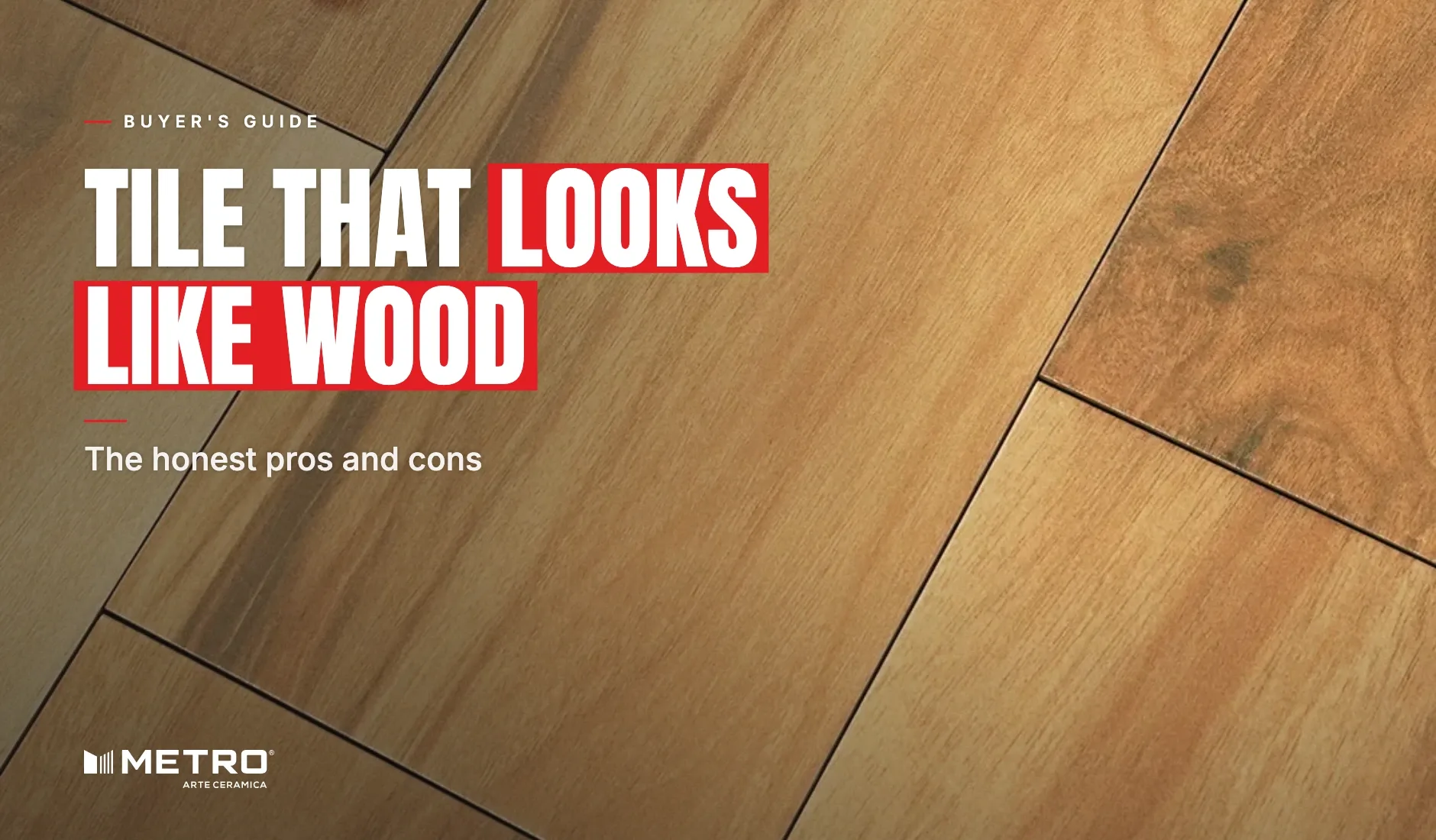
Tile that looks like wood gets recommended constantly, but not every room or budget suits it equally well. Here is a balanced look at what it does better than real hardwood, and the trade-offs worth knowing before it goes into your home.
First: ceramic or porcelain?
Most articles on this topic skip straight past the material question, and it is the one that determines whether the tile suits your project.
Both ceramic and porcelain wood-look tiles are fired clay bodies with a digitally printed wood grain. The difference is density. Porcelain is fired denser and absorbs less water, which is what makes it the specification for exposed exterior use in freezing climates. Ceramic absorbs more, and for interior floors that difference rarely matters.
Metro's tiles are ceramic, tested at 6 to 8% water absorption. That is a stable, durable body for interior flooring, including kitchens and bathrooms, and it is not the right product for an uncovered patio in a climate that freezes hard. If your project is interior, ceramic is a sound choice and the rest of this article applies. If it is an exposed outdoor floor in a cold climate, you need a frost-rated product.
The case for wood-look tile
It will not warp with humidity
Real hardwood is hygroscopic. It takes on moisture in humid months and releases it in dry ones, which is why solid wood floors cup, gap, and creak seasonally. A fired ceramic body does not do this. The tile you install in July is dimensionally the same tile in January.
Low maintenance, permanently
There is no sanding, staining, or refinishing cycle. Sweeping and a damp mop with a pH-neutral cleaner is the entire routine, for the life of the floor. Compare that to hardwood, which needs refinishing every seven to ten years in a busy household and spot attention long before that.
Moisture resistance where hardwood fails
Kitchens, bathrooms, mudrooms, and laundry rooms are the rooms where hardwood underperforms no matter how good the finish is. A glazed tile surface does not care about a dropped glass of water or a wet dog.
Consistent appearance across a large space
Because the grain is digitally printed and fired into the tile, a large open-plan area laid from a single batch keeps a consistent look. Natural hardwood carries board-to-board color variation that can read as patchy across a big room, depending on the grade you buy.
Scratch and dent resistance
A ceramic surface resists pet claws, dropped objects, and furniture legs better than a finished wood floor does. Hardwood shows a dog's nails within the first year in most homes.
The real trade-offs
It is harder underfoot
Tile has none of the slight give hardwood has. Standing at a kitchen counter for an hour is noticeably harder on the legs and lower back on tile than on wood or a floating floor. This is the single most common regret people report, and it is worth standing on a sample in a showroom before committing a main living area.
Grout lines are a permanent design element
Every tile floor has them. Unlike a continuous hardwood plank run, they are a visible part of the floor's texture. A tone-matched grout minimizes the effect considerably, but it never disappears entirely.
It is colder to the touch
Without radiant heat underneath, tile reads colder underfoot than hardwood, particularly in northern climates through winter. Some people like this in summer. Most notice it in February.
Installation is less forgiving
Tile is far less tolerant of an uneven subfloor than a floating hardwood or engineered system. A poorly prepped subfloor shows up as lippage between tiles or cracking, and both are expensive to fix after the fact. Budget for proper subfloor prep rather than treating it as optional.
Replacing a single tile later is harder than it sounds
If a hardwood board gets damaged, refinishing usually blends it back in. If a tile chips five years on and the original batch is gone, a slight shade mismatch can end up more noticeable than the chip was. Buying 10% extra at the time of order and storing it is cheap insurance.
What separates a good wood-look tile from a cheap one
The gap between a convincing wood-look floor and an obvious one comes down to three things.
Edge profile. Metro's curve edge tiles are mould-formed rather than machine-cut flat, reproducing the rounded profile of a real plank. Rectified tiles have a sharp squared edge and are more prone to bending across long formats, which produces lippage between planks. On a large floor, that is where the illusion breaks.
Number of random face patterns. A design with only one or two printed faces will visibly repeat every few tiles. Metro's collections carry multiple random patterns per design, which is what keeps a large floor from reading as a grid of identical copies.
Print resolution. 3D high-definition printing reproduces grain and knot detail that holds up at close range, not just from across the room.
Metro manufactures at its facility in Morbi, Gujarat, in 9mm (about 3/8 inch) thickness, and carries CE and ISO certification.
Where wood-look tile makes the most sense
Kitchens, bathrooms, mudrooms, and laundry rooms, where hardwood's moisture vulnerability makes it a poor long-term choice regardless of finish quality.
Homes with radiant underfloor heating, since tile conducts heat far more efficiently than solid hardwood.
High-traffic rental or commercial spaces, where low maintenance and scratch resistance matter more than underfoot comfort.
Homes with large dogs, where hardwood will show claw marks within a year.
Where real hardwood may still win
Bedrooms and quiet living spaces, where underfoot warmth and comfort outweigh tile's durability advantage.
Homes planning to refinish rather than replace over a multi-decade span, since hardwood can be sanded several times across its life.
Older homes where a floating or nail-down system suits an uneven existing subfloor better than tile would.
Weigh the trade-offs room by room
The right answer is usually not "tile everywhere" or "hardwood everywhere." It is choosing tile for the rooms where durability and low maintenance outweigh underfoot comfort, and making that call room by room rather than for the whole house at once.
Browse Metro's wood-look tile sizes or talk to our team about which rooms in your home suit tile best.
Frequently asked questions
What is the biggest downside of wood-look tile?
Two things come up most: it feels harder and colder underfoot than real wood, and grout lines are a permanent visible texture rather than a continuous plank run. Neither is a defect, but both are worth experiencing in person first.
Does tile that looks like wood actually look like wood?
At normal viewing distance, modern printing is convincing. Close inspection or raking light can reveal a repeating pattern on lower-quality tile, which is why the number of random face patterns per design matters more than the print resolution alone.
Is wood-look tile a good idea for a whole house?
It depends on the room. It is a strong choice for kitchens, bathrooms, and high-traffic areas, while many homeowners still prefer wood in bedrooms for underfoot warmth. Deciding room by room usually beats one decision for the whole floor plan.
Can you install radiant heating under wood-look tile?
Yes, and it is one of tile's clearest advantages over hardwood. Tile is an efficient thermal conductor, so a radiant system heats the room faster and more evenly than it does through wood.
Is ceramic wood-look tile durable enough for a busy household?
For interior floors, yes. Ceramic resists scratching, moisture, and daily wear better than a finished hardwood floor. The limitation is exterior use in freezing climates, not household traffic.
What is the difference between curve edge and rectified wood-look tile?
Curve edge tiles are mould-formed with a rounded plank profile that mimics real timber. Rectified tiles are cut flat and square, and are more prone to bending across long formats, which shows as lippage between adjacent planks.